
Porcelain Veneers in Layton, UT: A Patient Guide
Porcelain veneers in Layton, Utah, offer a conservative way to reshape and brighten teeth for a natural-looking smile. At 4 Dental Health, this cosmetic option can address chips, gaps, discoloration, and minor alignment concerns with long-lasting, custom-made restorations. This page explains how veneers work, who may benefit, the treatment steps, expected recovery, and care over time.
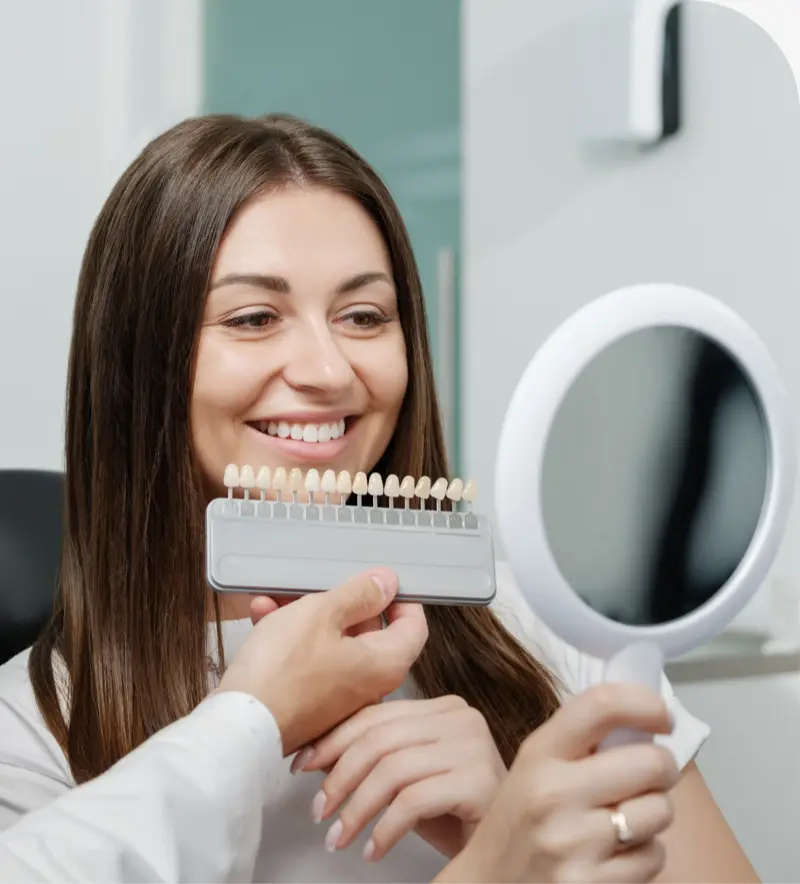
Porcelain Veneers Explained
Veneers are thin, custom-crafted shells of medical-grade porcelain that bond to the front surfaces of teeth. The porcelain mimics natural enamel, reflecting light and matching surrounding teeth for a seamless result. Compared with full crowns, veneers preserve more tooth structure because only a small amount of enamel is shaped to make room for the veneer.
Concerns Veneers Can Address
- Stubborn discoloration that does not respond to whitening.
- Chips, cracks, and uneven edges on front teeth.
- Small gaps or minor crowding that affect symmetry.
- Teeth that appear short, worn, or misshapen.
- Enamel defects such as pitting or mottling.
Benefits of Porcelain Veneers
- Natural translucency for lifelike color and clarity.
- Conservative approach that preserves healthy tooth structure.
- Stain resistance to everyday foods and beverages.
- Durable material designed to function under normal bite forces.
- Efficient timeline, often completed in two to three visits.
Step-by-Step Veneers Guide
The veneers process follows a careful plan to achieve a precise fit and color match.
- Consultation and smile planning: A comprehensive exam, photos, and X-rays identify goals and confirm candidacy.
- Tooth preparation: A thin layer of enamel is shaped to create space for the veneer and maintain natural contours.
- Impressions and shade selection: Digital or traditional molds guide the dental lab, and shade is chosen to match nearby teeth or a brighter target.
- Temporary veneers: Provisional restorations protect teeth and preview shape while the lab fabricates the final set.
- Try-in and bonding: Fit, color, and bite are verified before each veneer is bonded with resin cement and light-cured.
- Final adjustments: Minor polishing and bite refinements complete the appointment.
What to Expect
Local anesthetic is often used during tooth preparation to keep you comfortable. Mild sensitivity to temperature or pressure is common for a few days, especially around the temporaries. Most patients return to normal routines the same day. After bonding, it is normal for the bite to feel slightly different for a short period while your mouth adapts. A follow-up visit confirms comfort, bite balance, and hygiene around the new margins.
Care, Longevity, and Alternatives
With good home care and routine professional visits, porcelain veneers commonly last 10 to 15 years or longer. Daily brushing with a nonabrasive toothpaste and regular flossing help protect the edges where the veneer meets the tooth. Avoid using teeth as tools, and consider a custom night guard if you clench or grind to reduce stress on the porcelain. While veneers resist stains, the surrounding tooth and gumline can discolor, so moderate intake of coffee, tea, and red wine is helpful.
Alternatives may include professional whitening for overall color improvement, dental bonding to repair small chips or gaps, orthodontic treatment to correct alignment, or crowns for teeth with large fractures or deep decay. A personalized exam by our dentist can help determine whether porcelain veneers, bonding, whitening, or another option best matches your goals.
Did You Know?
Porcelain veneers can last 10–15 years or longer with proper care, making them one of the most durable cosmetic options available.
Got Questions?
Frequently Asked Questions
Veneers are considered irreversible because a small amount of enamel is removed. They can be replaced over time, but the tooth will always need a covering once prepared.
When planned carefully, veneers preserve most of the natural tooth. Proper bonding techniques and routine dental care help maintain tooth health under the veneer.
Many veneers last 10 to 15 years or more with good hygiene, regular dental checkups, and protective habits such as wearing a nightguard if you grind your teeth.
Whitening gels do not change the color of porcelain. If you plan to brighten your smile, whitening is typically done before veneers so the new restorations can be matched to the lighter shade.
Healthy gums, adequate enamel, and stable bite function support good outcomes. People with untreated decay, gum disease, or heavy grinding may need preliminary care before veneers.
Bonding uses tooth-colored resin placed chairside, which is helpful for small repairs. Veneers are lab-made porcelain shells that offer greater strength, polish, and color stability.
Ready to Transform Your Smile?
Call (801) 444-9090 or contact 4 Dental Health to schedule a consultation for porcelain veneers in Layton, UT with Dr. Steven Christensen.