
Digital X-Rays in Layton, UT
Digital X-rays in Layton, Utah, provide clear, efficient imaging to support accurate diagnoses for patients. This guide outlines what digital dental radiography is, how it works, the benefits for your oral health, and what to expect during a visit.
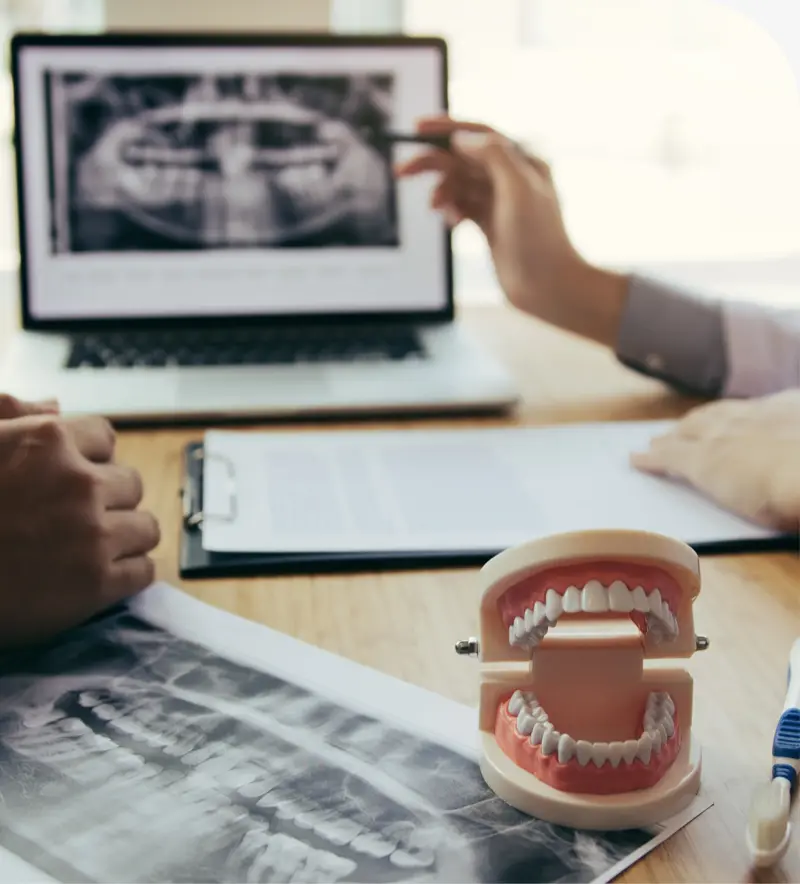
Digital X-Rays Explained
Digital X-rays use small electronic sensors or a panoramic unit to capture images of your teeth and jaws. Unlike traditional film, the images appear almost instantly on a computer screen. Our dentist can adjust contrast and magnification to highlight areas of concern, which supports early cavity detection, evaluation of bone levels, and assessment of infections.
Because the system is more sensitive than film, digital dental X-rays generally require less radiation while still producing high-quality images. The result is efficient, detailed imaging that helps detect problems not visible to the eye, such as decay between teeth, impacted teeth, root issues, and changes in the jawbone.
Benefits of Digital X-Rays
- Lower radiation exposure compared to traditional film.
- High-resolution images that enhance diagnostic accuracy.
- Fast results that streamline your appointment.
- Easy image sharing for referrals or second opinions.
- Environmentally friendly, with no chemical processing.
- Better visualization to monitor gum disease and bone changes.
- Improved comfort with slim, modern sensors.
How Digital X-Rays Work
During intraoral imaging, a small sensor is placed where needed to capture a specific area. When the sensor is activated, the image appears on-screen within seconds. Our dentist reviews the image for signs of decay, infections, bone loss, and other concerns. Images are stored securely in your digital chart so changes can be compared over time.
Extraoral imaging, such as panoramic X-rays, captures your entire mouth in a single image. This view helps evaluate wisdom teeth, jaw joints, sinus areas, and overall bone structure.
What to Expect at Your Appointment
Your visit typically begins with a review of your health history and past images. A lead apron, and when appropriate a thyroid collar, may be used as an added precaution. You will be guided on how to gently bite on the sensor or rest your chin for a panoramic image. Most images take only a few seconds to capture.
If you have a strong gag reflex or jaw discomfort, tell the team before images are taken. Positioning can often be adjusted, and smaller sensors or different techniques may improve comfort.
Common Types of Digital Dental X-Rays
- Bitewing X-Rays: Helpful for finding decay between back teeth and monitoring bone levels.
- Periapical X-Rays: Focus on the entire tooth from crown to root tip to evaluate infections or fractures.
- Panoramic X-Rays: Show the jaws, teeth, and surrounding structures to assess growth, wisdom teeth, and jaw joints.
- Occlusal X-Rays: Capture larger areas of the upper or lower arch to evaluate tooth development or impacted teeth.
Did You Know?
Digital X-rays reduce radiation exposure by up to 80% compared with traditional film, while producing sharper images for more accurate diagnosis.
Got Questions?
Frequently Asked Questions
Yes. Digital dental X-rays use a low dose of radiation and follow the ALARA principle. A lead apron and thyroid collar may be used for added protection.
Frequency depends on your age, cavity risk, gum health, and dental history. Many adults with low cavity risk may need bitewings every one to two years.
Digital X-rays can reveal decay between teeth, bone loss from gum disease, abscesses, cysts, impacted teeth, root problems, and developmental issues.
No. The process is not painful. Some patients notice mild pressure from the sensor during intraoral images. If something feels uncomfortable, let the team know.
Tell our dentist if you are pregnant or think you might be. In many non-urgent cases, imaging can be postponed. When X-rays are necessary, modern equipment and shielding keep exposure very low.
Digital systems provide quicker images, enhanced detail with on-screen adjustments, and reduced radiation compared to film. They also eliminate chemical processing and simplify storage.
Due for Dental Imaging?
Call (801) 444-9090 or contact 4 Dental Health to schedule digital X-rays in Layton, UT with Dr. Steven Christensen.