
Pediatric Digital X-Rays in Layton, UT
Pediatric digital X-rays in Layton, Utah, help our dentist assess developing teeth and jaws with clarity and minimal radiation. At 4 Dental Health, these images support early cavity detection, track growth, and guide timing for treatments.
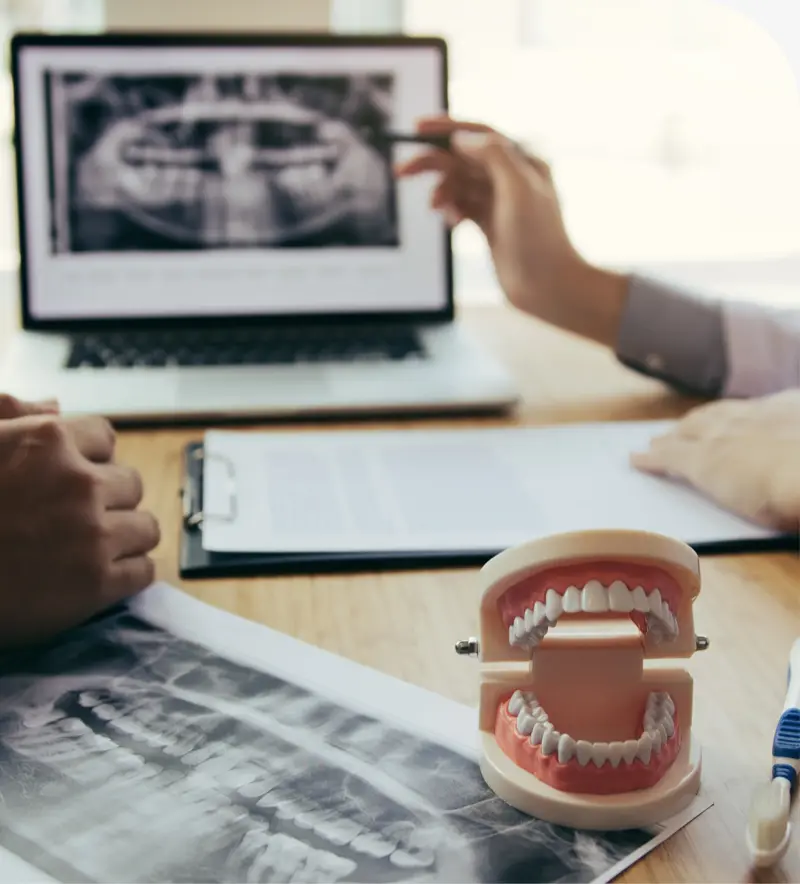
Pediatric Digital X-Rays Explained
Pediatric digital X-rays are electronic images captured by a small sensor and displayed instantly on a computer screen. They reveal areas that are hard to see during a visual exam, such as between teeth, below the gumline, and around developing tooth roots.
Digital technology produces high-resolution images that can be enlarged, colorized, and enhanced for accuracy. This helps identify cavities, evaluate eruption paths, monitor spacing, and spot early signs of infection or trauma.
Benefits of Pediatric Digital X-Rays
- Lower radiation compared with traditional film supports excellent safety for kids.
- Instant images reduce chair time and make visits smoother.
- Enhanced detail improves detection of small cavities and developmental issues.
- Smaller, flexible sensors increase comfort for young patients.
- Electronic storage makes follow-up and comparisons simple over time.
- No chemical processing is needed, which is better for the environment.
How Pediatric Digital X-Rays Work
A child wears a protective lead apron with a thyroid collar, and a small sensor is placed in the mouth. The X-ray unit is positioned for a brief exposure, often less than a second. The image appears on the screen right away. Digital systems support the principle of ALARA (As Low As Reasonably Achievable), meaning only necessary images are taken at the lowest effective exposure.
Your Child's X-Ray Experience
Most children tolerate pediatric digital X-rays well, especially when the process is explained in simple steps. A small sensor and careful positioning help reduce gagging.
Frequency depends on cavity risk, age, diet, oral hygiene, and past history. Safety is ensured through very low radiation doses, protective aprons, and targeted beams.
Did You Know?
Digital X-rays for children use minimal radiation and provide instant images that help detect hidden decay between developing teeth.
Got Questions?
Frequently Asked Questions
Yes. Digital systems use very low radiation, tailored to a child's size. Protective aprons and careful technique further reduce exposure.
A small sensor is placed inside the mouth, a quick exposure is taken, and the image appears on a screen. Our dentist reviews the result and explains any findings.
Timing is based on cavity risk, growth stage, and symptoms. Bitewings are common to check between teeth. Panoramic images help assess growth and positioning.
Bitewing images check for between-tooth decay. Periapical views assess the entire tooth. Panoramic images show teeth, jaws, and sinuses.
X-rays do not hurt. Sensors are small and flexible, and gentle positioning helps reduce gagging. Breathing through the nose can also make placement easier.
Intervals vary. Children with higher risk of decay may need images more often, while low-risk children may need them less frequently.
In many cases a parent can remain nearby outside the path of the X-ray. The team will guide you to a safe position according to office protocols.
Schedule Your Child's X-Ray Visit
Call (801) 444-9090 or contact 4 Dental Health to schedule pediatric digital X-rays in Layton, UT with Dr. Steven Christensen.